Why Software Security Starts with the Network Table
When enterprise software security comes up, many people immediately think of code, authentication, or data encryption. In practice, however, the first line of defense is where the software runs: the network, the server, and the processing infrastructure. If access between departments remains unnecessarily open or server capacity is chosen without calculation, even well-built software becomes fragile under real workload conditions.
Needs Assessment Before Any Action
Secure infrastructure design, unlike buying an off-the-shelf product, does not begin with a single decision. Before proposing any architecture, you need to answer questions that seem simple on the surface but change the project's direction once answered:
- What transaction volume moves during peak working hours?
- Which systems should communicate with each other and which should remain isolated?
- Where is sensitive data stored and who has access to it?
- If one component goes offline, which business process stops?
Resources available from ARETAVIA follow the same logic: collaboration begins by reviewing project needs and constraints, and the service scope, timeline, and cost are determined after a joint assessment. This approach is not about being slow; it prevents organizations from paying for infrastructure that does not respond to their actual usage patterns.
Layering Instead of a Single-Product View
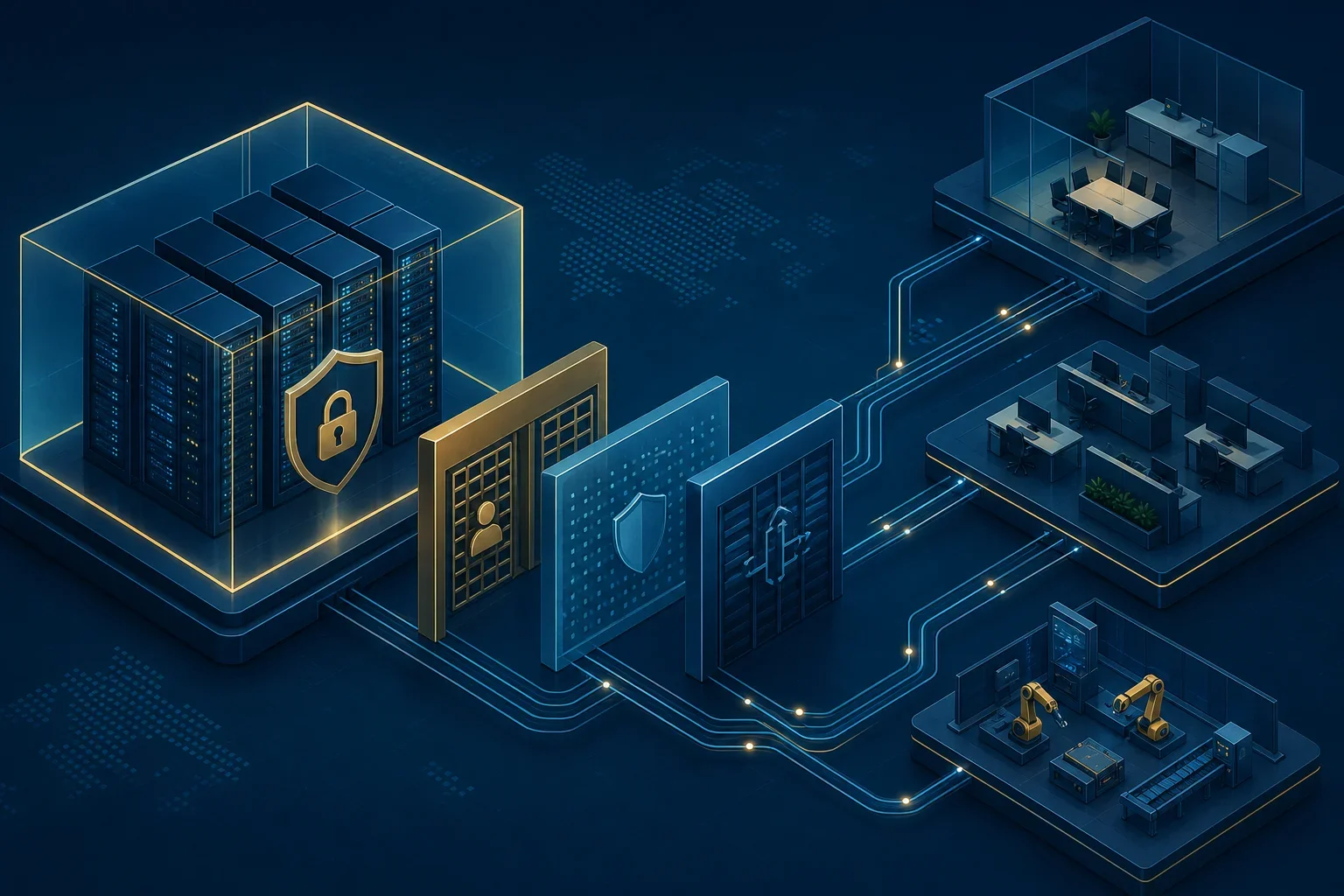
Secure infrastructure cannot be reduced to one piece of hardware or one security software product. The main components are usually seen in three layers:
Communication Layer
The organizational network and access design between branches, remote users, and internal systems. At this layer, network segmentation, traffic monitoring, and access policy definition stop leakage or intrusion before it reaches the software layer. Network and IT infrastructure services at ARETAVIA include needs review, design, and implementation of exactly this organizational communication infrastructure.
Processing Layer
The server, virtualization, and data center hosting where the software runs. Choosing processing resources matched to the organization's capacity and goals matters; too little capacity brings the system down during peak transactions, while too much capacity needlessly raises maintenance costs. The design and maintenance of this layer are defined through a joint evaluation of needs and constraints.
Unified Communications Layer
In organizations where telephony is part of the process, such as hotels or travel agencies, voice over IP is also part of the software infrastructure. Solutions such as VoIP system assessment and design help organizations manage their telephone channels with the same security standard applied to the data layer.
Industry Differences in Security Design
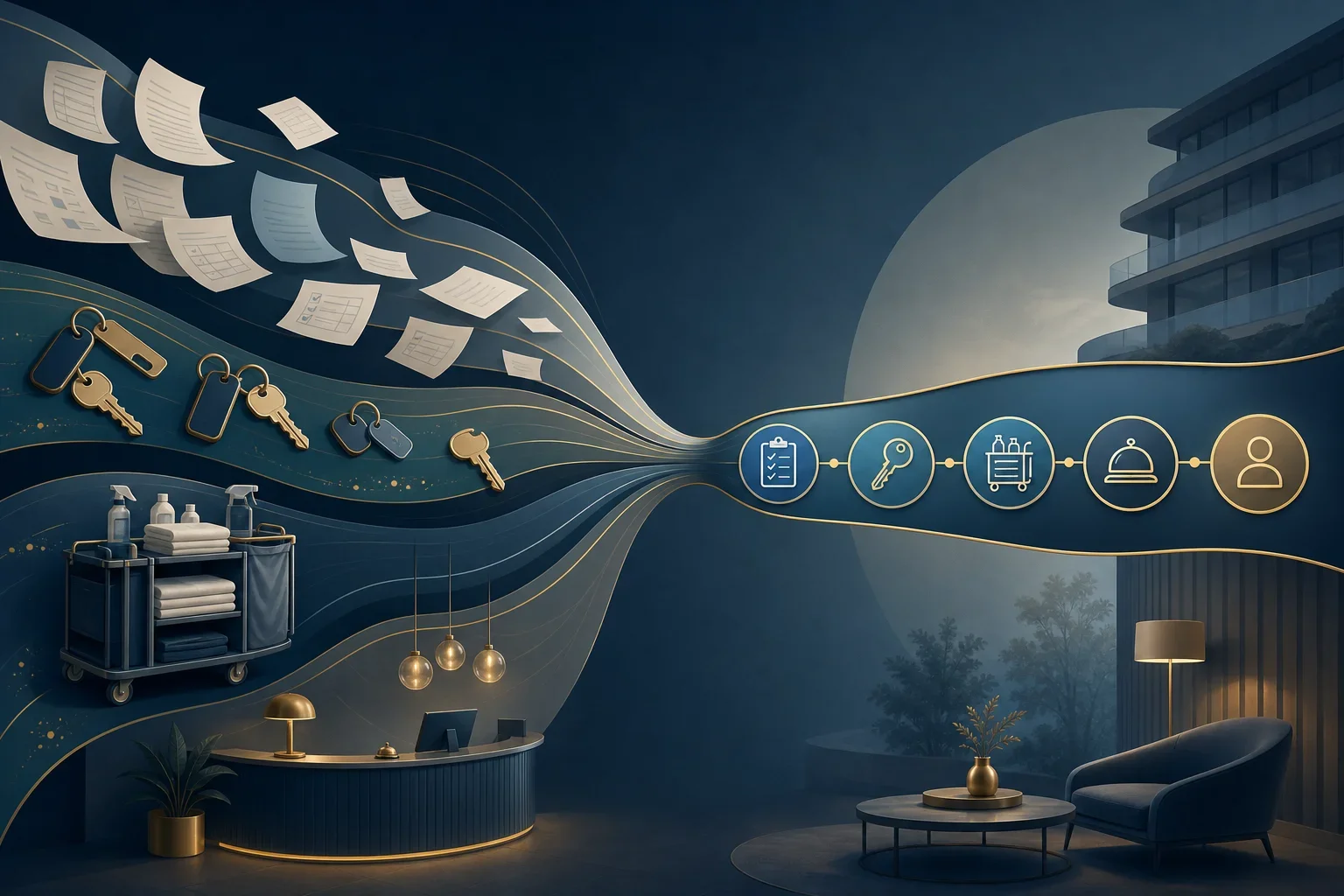
The infrastructure of a hotel is not the same as that of a travel agency. In hospitality, the network must simultaneously support the property management system, payment terminals, and guest access; in a travel agency, stable connectivity to external reservation systems and preserving customer data integrity become the priority. For this reason, ARETAVIA's enterprise solutions source emphasizes designing systems and infrastructure around each business's processes rather than offering a fixed template for everyone.
This industry distinction is especially visible in tourism and hospitality: the combination of software and communication services must be designed to cover the requirements of that specific industry, not merely a generic product with superficial settings.
From Design to Sustainable Operation
Implementing secure infrastructure is not the end of the journey. After launch, the system's actual behavior is compared with initial forecasts, and settings are corrected when needed. A significant part of security sustainability comes down to continuous maintenance and monitoring: updating access policies, reviewing resource capacity, and examining logs that reveal early signs of trouble.
Decision-Making Questions
If your organization is about to launch new software or is tired of the current system's instability, examine these three questions before any purchase:
1. Is the current infrastructure designed for next year's workload, or does it only meet today's needs?
2. Are access policies between departments documented and open to review?
3. Who is responsible for continuous monitoring, and what happens in their absence?
The answers usually show that the organization's problem is not the software; it is the lack of infrastructure on which the software can operate securely and reliably. For a more detailed review of your organization's needs, submitting a consultation request is a good starting point.