When the night shift and the morning shift don't talk
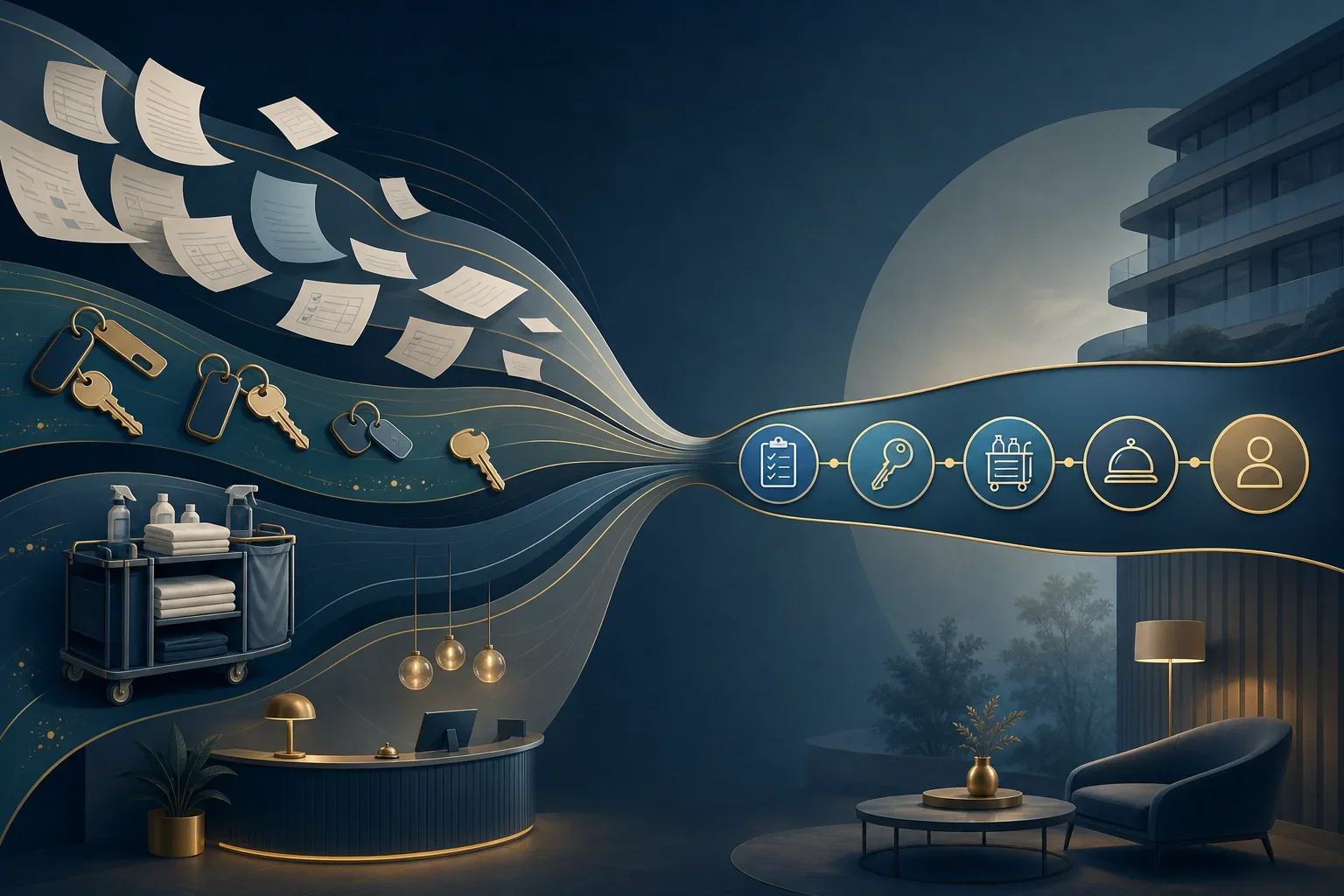
The guest registration sheet, the night shift's mobile phone, and staff memory: these three connection points are the most common path for transferring information in some small and mid-sized hotels. An hour after shift handover, a guest who requested a room change last night calls, and the morning shift finds no record of the request. The problem is not carelessness; the flaw lies in a path that does not turn reported information into working memory. In such situations, a hotel management system is meant to replace this scattered memory and keep the status of every accommodation unit centralized and retrievable.
Where does hotel operations management actually sit?
When we talk about a PMS, or Property Management System, we are not just talking about the reservation screen. The system sits at the center of processes that depend on each other around the clock: front desk, housekeeping, group reservations, billing, and guest communication. If room status is not properly synchronized between housekeeping and the front desk, one of two errors occurs: either an unprepared room is assigned to a guest, or a ready room sits empty for hours. Both errors carry a specific cost: the first damages the guest experience, and the second eliminates that night's revenue potential.
From reservation to checkout: where does information get lost?
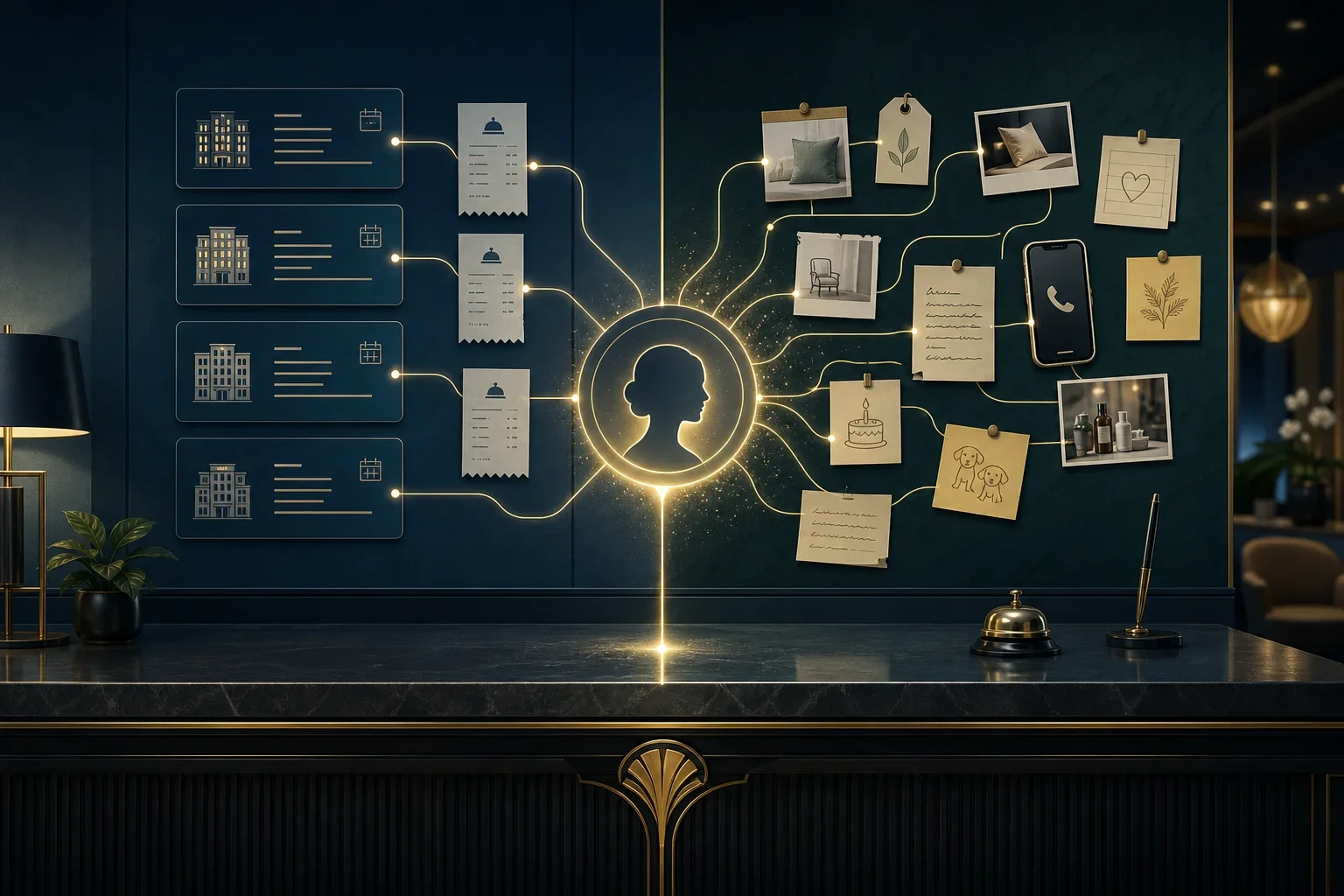
Reviewing the path of a short stay can illuminate the blind spots in operations. First, a reservation request arrives from the website or by phone; if it is written into a separate file instead of being recorded in a shared database, the first information gap appears. After the guest arrives, restaurant charges or additional services may be recorded separately from the room account. At checkout, the front desk agent has to add up several sources. If a mistake occurs along the way, the hotel's brand suffers and checkout takes longer. In this chain, a centralized operations system is not merely a data recorder; it connects the path from reservation to checkout and reduces duplicate entry and manual error.
Rooms we don't know are ready or not
Housekeeping usually operates separately from the front desk, but the value of both teams is unlocked the moment room status becomes transparent between them. Without a shared view, the housekeeping supervisor has to call or send messages to learn which rooms have been vacated; the front desk must also stay alert to sell the room as soon as it is declared ready. In small hotels, this delay may seem like a few minutes, but on days with high occupancy or when guests arrive earlier than scheduled, those minutes turn into front desk queues and longer waits. The job of a hotel management system in this area is to eliminate repetitive calls and synchronize room status in real time; a capability whose impact is visible not in a report, but in the rhythm of guest turnover.
Connecting a PMS to other tools is not optional
Even the best hotel management system cannot do everything alone. Online sales channels, the booking website, the phone system, and the customer relationship management solution each cover part of the guest journey. If these tools cannot exchange data with the main system, the same gaps reappear at the boundaries between systems. For example, when a reservation comes in from an online platform, it should enter the room calendar without manual intervention; if staff must transfer every reservation by hand, the value of automation disappears. For this reason, when evaluating a solution, instead of focusing on visible features, you should ask how it connects to current or future tools.
ARETAVIA has introduced solutions for the hospitality sector such as Rooma for hotel process management and Hotiva for customer relationship management in the hospitality industry. Details on availability, capabilities, and how these solutions integrate with other systems require confirmed information from the ARETAVIA team. It is therefore better to match general statements about PMS against the actual documentation of each solution.
On what basis should a hotel management system be evaluated?
Before talking to a vendor or technical team, it helps to put three questions on paper. First: which process is currently managed manually and carries the most errors or delays? Second: where does the data for that process enter the system, and where should it be transferred? Third: who will work with the system, and in which shifts? The answers clarify whether the core issue is a specific feature or workflow simplification. For example, if most errors occur in settling incidental charges, the focus should be on billing integration, not merely on management reporting features.
Start with the operations checklist
No solution can fix a disordered process on its own. First, you need to identify which activities are standardized, which run in parallel, and which are manual. Then you can examine where a hotel management system can realistically serve as an information intermediary. If the process structure is still unclear, a small project to document the current state can be a logical prerequisite for evaluating any software. That is the point where the difference between "having a reservation screen" and "centralized management of hotel operations" becomes clear.