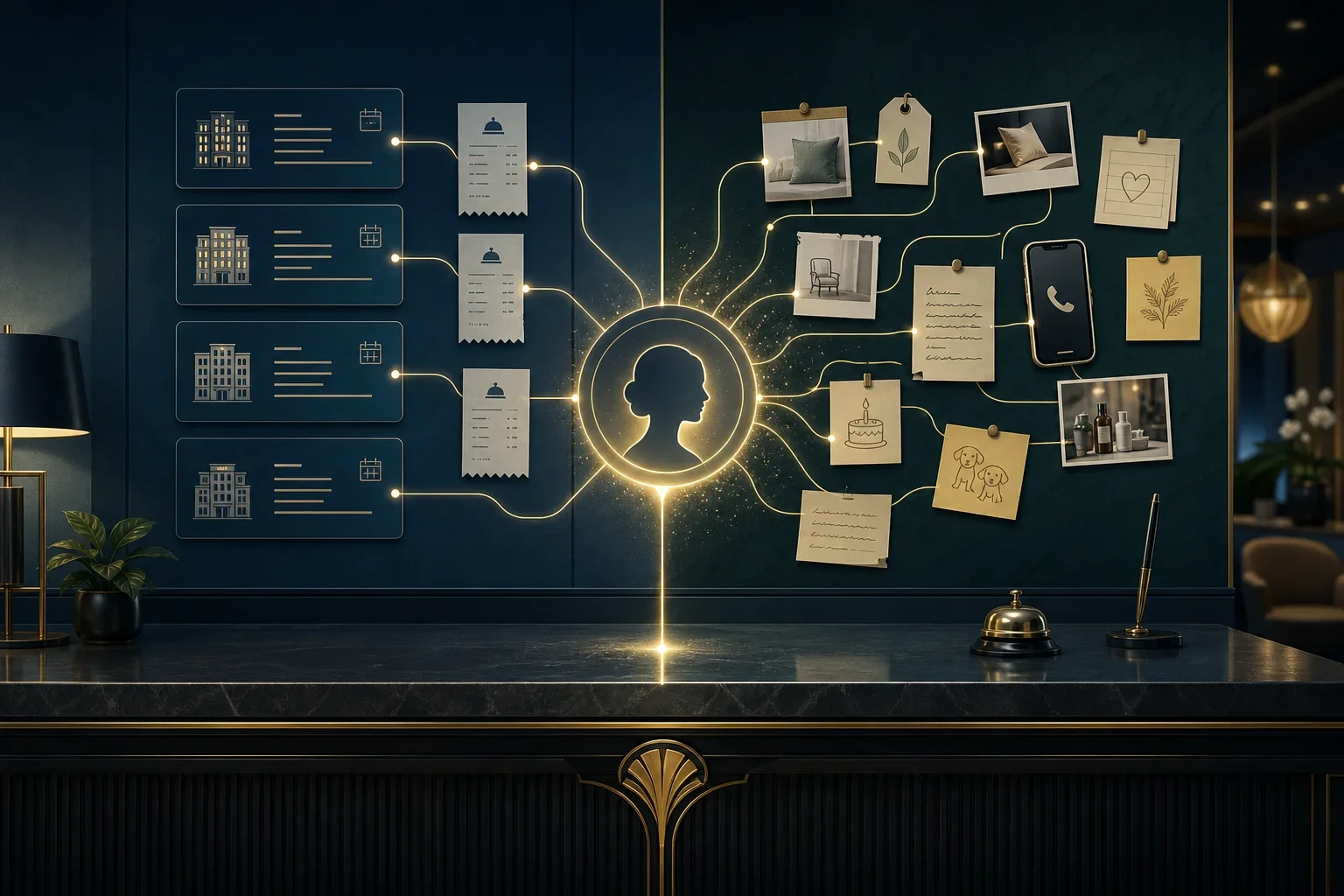
The First Encounter at the Front Desk Is the Last Piece of Data Recorded
Most hotels know when a guest checked in, which room they took, and how much they paid. This data sits in the property management system and is sufficient for running the building and handling accounting. But when the same guest calls months later and says, "The third-floor room didn't suit me last time," front desk staff usually have no way to see that preference anywhere. The problem is not a lack of information; it is the missing relational layer between reservation data and the actual conversations with the guest.
In a hotel, every conversation with a guest is part of their experience, from the phone call before the trip to the message sent after departure about a forgotten charger. The hotel management system brings order to the stay itself, but it does not answer the question of how the hotel's relationship with the guest has developed over time. This is where the concept of hospitality CRM becomes meaningful: not as a replacement for the hotel management system, but as a relational memory that connects the front desk, reservations, and support.
The Difference Between Stay Records and Knowing the Guest
The hotel management system answers "what happened." A hotel CRM should answer "who the guest is." A stay record shows that a guest booked a room twice in the past year and checked out a night early each time. But knowing the guest comes from putting together smaller pieces: he usually calls in the evenings, prefers rooms far from the elevator, does not bring his family on business trips, and always follows up about an official invoice after his stay.
When this information lives in the memory of a long-serving front desk employee, it disappears when staff move on. When it is scattered across separate systems, no one sees the full picture. Customer relationship management in hospitality gathers exactly these pieces into a single file so preferences carry over from one stay to the next. Without this layer, every stay feels like a first encounter; a guest who has come many times has to explain what he wants all over again every time.
In Which Channel Do Conversations Get Lost?
Part of the guest experience takes shape before the guest arrives at the hotel. The front desk phone, messages on social media, reservation emails, and website chats each leave a trace of what the guest expects. If these traces are not recorded, staff start from zero every time. The guest feels he has repeated his request several times, and the hotel feels its staff spend too much time asking the same questions.
A practical step is for the hotel to map the guest communication journey before choosing any tool: where does the first contact happen? Which channel does a room change request come through? What message is sent to the guest after the stay? At each point, the hotel should define what information needs to be recorded and who should have access to it. This exercise usually reveals where guest data leaks, such as night shift notes that never reach the morning shift.
The Boundary Between Existing Solutions and a Hotel's Real Needs
In introducing its products for the hospitality industry, ARETAVIA refers to Hotiva as a customer relationship management solution and to Rooma as a hotel management and stay process solution. Rezino is also introduced as a customer relationship management solution for the tourism industry. However, confirmed information about the availability, features, demo, and terms of use of these products can be obtained by contacting the ARETAVIA team. These introductions alone do not claim the availability of any specific capability.
For a hotel, the right decision does not always begin with comparing feature checklists. Sometimes the core issue is that guest data stays in the property management system and never reaches the sales or support team. In that case, the question is about system integration, not just buying a new module. So before evaluating any product, a hotel should ask: which internal process can be improved with existing data? Which gap can only be filled with a new tool? The answer to these two questions matters more than the technology choice itself.
Do Not Separate the Guest Experience from Stay Data
The guest experience starts the moment someone searches for the hotel and continues long after checkout. Stay data without a relational context is only half the picture; to complete the other half, the hotel needs to know what the guest expected at each stage and how the hotel responded. Solutions like hospitality CRM can complete that picture, but only when the hotel has first determined which information actually drives its decisions.
The next step for a hotel can be to review the current state of its data: ask front desk staff how many times in a week they collect repeated information from guests, and ask the sales team which guest information they have to gather from other systems. The result of this simple review shows where the main gap lies and whether a customer relationship management layer should be the hotel's next priority.